The Power of Yoga for Stress Relief
In today’s fast-paced world, stress has become a constant companion for many. From tight work deadlines to endless digital distractions, our minds rarely get the rest they need. Fortunately, yoga offers a natural and holistic way to combat stress, calm your mind, and restore inner balance.
Yoga combines breathwork, movement, and mindfulness – a trio that helps activate the body’s relaxation response. Whether you’re a beginner or an experienced practitioner, integrating specific yoga poses for stress relief can help you regain control over your emotions and promote lasting mental clarity.
As featured on Fit Life Arena, a leading fitness and wellness blogging website, yoga continues to evolve as one of the most powerful tools for reducing anxiety and promoting peace in an ever-changing world.
How Stress Affects the Mind and Body
Before diving into poses, it’s essential to understand what stress does to your system. When you’re stressed, your body releases cortisol and adrenaline, hormones that prepare you for a “fight or flight” response. While this is helpful in short bursts, chronic stress leads to:
- Muscle tension and fatigue
- Poor sleep and digestion
- Irritability or mood swings
- Increased heart rate and blood pressure
Over time, this constant state of tension can wear you down physically and emotionally. That’s where yoga steps in – helping reverse the body’s stress response through controlled breathing and mindful movement.
The Science Behind Yoga and Stress Reduction
Yoga’s stress-relieving benefits are not just anecdotal – they’re backed by science. Studies show that yoga:
- Lowers cortisol levels, reducing stress and anxiety
- Activates the parasympathetic nervous system, promoting relaxation
- Improves serotonin production, enhancing mood and positivity
- Encourages mindfulness, helping you live in the present moment
Through consistent practice, yoga helps you build resilience – both mentally and physically – making it easier to handle life’s challenges with calm and clarity.
Top 10 Yoga Poses to Calm Your Mind
Let’s explore some of the most effective yoga poses for stress relief and mental calmness. These poses focus on relaxation, deep breathing, and releasing tension from the body.
1. Child’s Pose (Balasana)
Purpose: Promotes relaxation and mental calmness.
How to Do:
- Kneel on your mat with your big toes touching.
- Sit back on your heels and fold forward, extending your arms in front of you.
- Rest your forehead on the mat and breathe deeply.
Benefits:
- Relieves tension in the back, shoulders, and neck.
- Calms the brain and soothes the nervous system.
2. Cat-Cow Stretch (Marjaryasana-Bitilasana)
Purpose: Connects movement with breath, releasing tension in the spine.
How to Do:
- Start in a tabletop position.
- Inhale as you arch your back (Cow), exhale as you round your spine (Cat).
- Continue for 5–10 rounds.
Benefits:
- Improves spinal flexibility.
- Encourages rhythmic breathing and stress release.
3. Legs-Up-the-Wall Pose (Viparita Karani)
Purpose: Restorative posture that soothes the nervous system.
How to Do:
- Sit close to a wall, then lie back and extend your legs upward.
- Keep your arms relaxed at your sides.
Benefits:
- Improves circulation and reduces fatigue.
- Calms anxiety and quiets the mind.
4. Standing Forward Bend (Uttanasana)
Purpose: Releases tension from the upper body and promotes mental clarity.
How to Do:
- Stand with feet hip-width apart.
- Hinge forward from the hips, letting your head and arms hang.
- Breathe slowly and deeply.
Benefits:
- Relieves headaches and anxiety.
- Encourages blood flow to the brain.
5. Bridge Pose (Setu Bandhasana)
Purpose: Opens the chest and reduces stress.
How to Do:
- Lie on your back with knees bent and feet flat.
- Lift your hips as you press your feet into the floor.
- Hold for 5–10 breaths.
Benefits:
- Stimulates the thyroid gland and calms the brain.
- Strengthens the back and glutes.
6. Corpse Pose (Savasana)
Purpose: Complete relaxation and mind-body integration.
How to Do:
- Lie flat on your back with arms and legs extended.
- Close your eyes and focus on your breath.
Benefits:
- Deeply relaxes the nervous system.
- Reduces stress, fatigue, and anxiety.
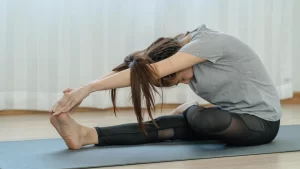
7. Seated Forward Bend (Paschimottanasana)
Purpose: Encourages introspection and emotional calmness.
How to Do:
- Sit with legs extended.
- Inhale and lengthen the spine, exhale as you fold forward.
- Hold for several breaths.
Benefits:
- Soothes the mind and relieves mild depression.
- Stretches the hamstrings and spine.
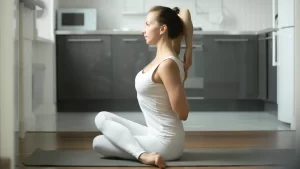
8. Easy Pose with Deep Breathing (Sukhasana)
Purpose: Promotes mindfulness and inner peace.
How to Do:
- Sit cross-legged with a straight spine.
- Close your eyes and take deep, rhythmic breaths.
Benefits:
- Reduces anxiety and improves focus.
- Encourages a meditative state.
9. Reclining Bound Angle Pose (Supta Baddha Konasana)
Purpose: Opens the hips and promotes relaxation.
How to Do:
- Lie on your back with the soles of your feet together.
- Let your knees fall open naturally.
Benefits:
- Eases stress and emotional fatigue.
- Supports relaxation and inner balance.
10. Alternate Nostril Breathing (Nadi Shodhana Pranayama)
Purpose: Balances the mind and clears emotional blockages.
How to Do:
- Sit comfortably.
- Close your right nostril and inhale through your left.
- Switch sides and exhale. Continue alternating for 5 minutes.
Benefits:
Balances both hemispheres of the brain.
Promotes deep relaxation and focus.
Tips to Enhance Your Stress-Relief Yoga Practice
- Create a peaceful space: Choose a quiet corner free from distractions.
- Use gentle music or aromatherapy: Calming scents like lavender enhance relaxation.
- Practice mindfulness: Focus on breath and sensation, not perfection.
- Be consistent: Even 10–15 minutes daily can make a huge difference.
- End with gratitude: Reflect on one thing you’re thankful for after each session.
Ever-Evolving Yoga Poses for the Modern Lifestyle
As yoga continues to evolve, new poses and styles emerge to meet modern needs. From power yoga that blends strength and flexibility to restorative yoga designed for deep relaxation, the practice adapts to every lifestyle.
In today’s digital world, where stress is constant, combining traditional yoga with modern breathing techniques and mindfulness practices can create a powerful stress-relief toolkit.
Platforms like Fit Life Arena regularly explore these evolving trends, helping individuals stay connected with yoga’s timeless essence while adapting to modern life’s demands.
Creating a Consistent Yoga Routine
To truly benefit from yoga’s calming effects, consistency is key. Here’s how to build a sustainable routine:
- Start small: Begin with 10–20 minutes a day.
- Set intentions: Focus on relaxation rather than perfection.
- Combine poses: Flow through 3–5 calming postures daily.
- Include meditation: Even 5 minutes of mindfulness can boost results.
- Track your progress: Journaling can help you notice emotional shifts.
Over time, you’ll notice increased emotional stability, better sleep, and a more peaceful outlook on life.
Conclusion: Find Your Inner Peace with Yoga
Stress may be inevitable, but how you respond to it is within your control. Yoga teaches you to pause, breathe, and reconnect with yourself – a skill that’s invaluable in today’s world.
By practicing these yoga poses for stress relief, you’ll cultivate calmness, enhance self-awareness, and strengthen your connection between mind and body. Remember, the journey of yoga is ever-evolving, just like life itself.
So roll out your mat, breathe deeply, and let yoga guide you toward serenity and inner peace.
Yoga is not just physical exercise – it’s a lifestyle of awareness and harmony. By incorporating these simple yet powerful poses into your routine, you can experience deep stress relief and emotional rejuvenation. Visit Fit Life Arena for more ever-evolving yoga and wellness guides to help you live a calmer, happier life.
FAQs
How often should I practice yoga for stress relief?
For best results, practice yoga at least 3–5 times a week. Even short daily sessions can significantly lower stress levels.
Can beginners do yoga for stress relief?
Absolutely! Most poses listed above are beginner-friendly and focus on relaxation rather than flexibility or strength.
When is the best time to practice yoga to calm the mind?
Early morning or before bedtime is ideal. Morning practice energizes the mind, while evening sessions promote relaxation and better sleep.
Do I need special equipment for stress-relief yoga?
A yoga mat and comfortable clothing are all you need. Optional props like bolsters or cushions can enhance comfort during restorative poses.
Can yoga replace meditation for stress management?
Yoga and meditation complement each other beautifully. Yoga prepares your body for meditation, while meditation deepens the calming effects of yoga.
How long does it take to notice results from yoga?
Many people feel immediate relaxation after their first session, but consistent practice for a few weeks brings long-term emotional balance and stress reduction.