Yoga has stood the test of time as one of the most effective ways to improve physical and mental well-being. Beyond the meditative calm it brings, yoga plays a vital role in developing flexibility and strength – two pillars of a healthy, active body.
Whether you’re a beginner or a seasoned yogi, certain yoga poses can help transform your body by stretching tight muscles, building lean strength, and improving balance.
In this article, Fit Life Arena brings you the 10 best yoga poses to boost flexibility and strength, along with tips on building a sustainable yoga routine that evolves with you.
Why Flexibility and Strength Matter in Yoga
Flexibility and strength are the foundation of every yoga pose. Flexibility allows your body to move with ease, preventing stiffness and injuries. Strength, on the other hand, supports your posture and provides stability, allowing you to hold challenging poses for longer periods.
When these two qualities work together, your yoga practice becomes more fluid, powerful, and beneficial for your overall health. Moreover, improved flexibility and strength enhance your daily activities – from better posture to reduced back pain.
The Ever-Evolving Nature of Yoga Practice
Yoga isn’t static; it evolves just like your body. Over time, as your flexibility improves and your muscles grow stronger, your practice naturally progresses.
Modern yoga blends traditional poses with new variations designed to target different muscle groups and adapt to diverse lifestyles. Whether you practice in a studio, at home, or outdoors, the beauty of yoga lies in its adaptability and ever-evolving nature – a perfect fit for the dynamic wellness philosophy promoted by Fit Life Arena.
10 Yoga Poses to Boost Flexibility and Strength
Let’s dive into the top 10 yoga poses that will transform your body from stiff to supple, weak to powerful.
1. Downward-Facing Dog (Adho Mukha Svanasana)
Benefits:
This foundational pose strengthens your arms, shoulders, and legs while stretching the hamstrings, calves, and spine.
How to do it:
- Start on your hands and knees.
- Lift your hips toward the ceiling, straightening your legs and pressing your heels toward the floor.
- Keep your spine long and your head relaxed between your arms.
- Hold for 5–10 breaths.
Tip: Engage your core to avoid collapsing your lower back.
2. Warrior II (Virabhadrasana II)
Benefits:
Builds strength in the legs, hips, and shoulders while improving endurance and flexibility in the groin and chest.
How to do it:
- Stand with your feet wide apart.
- Turn your right foot out and your left foot slightly in.
- Bend your right knee over your ankle and extend your arms parallel to the floor.
- Gaze over your right fingertips.
- Hold for 30 seconds, then switch sides.
Tip: Keep your back leg straight and your core firm.
3. Triangle Pose (Trikonasana)
Benefits:
Opens the hips and hamstrings while strengthening the legs and improving spinal flexibility.
How to do it:
- From Warrior II, straighten your front leg.
- Reach your front hand forward and lower it to your shin or the floor.
- Extend your other arm toward the sky, forming a straight line with both arms.
- Keep your chest open and gaze upward.
Tip: Avoid locking your front knee to maintain muscle engagement.
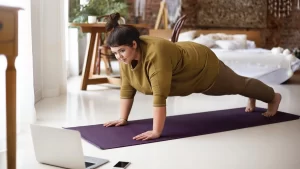
4. Plank Pose (Phalakasana)
Benefits:
Strengthens your arms, shoulders, abs, and back – an all-in-one core builder.
How to do it:
- Begin in a push-up position with your wrists under your shoulders.
- Keep your body in a straight line from head to heels.
- Engage your abs and glutes.
- Hold for 30–60 seconds.
Tip: Keep your hips aligned to prevent sagging or arching.
5. Cobra Pose (Bhujangasana)
Benefits:
Improves spinal flexibility and strengthens the back and shoulders.
How to do it:
- Lie face down with your palms under your shoulders.
- Press into your hands and lift your chest, keeping your elbows close to your body.
- Hold for 15–30 seconds.
Tip: Avoid overextending the neck; lift only as high as comfortable.
6. Bridge Pose (Setu Bandhasana)
Benefits:
Strengthens the glutes, hamstrings, and lower back while opening the chest and shoulders.
How to do it:
- Lie on your back with your knees bent and feet hip-width apart.
- Press into your feet to lift your hips.
- Interlace your fingers under your back for support.
- Hold for 30–45 seconds.
Tip: Keep your knees aligned and avoid flaring them outward.
7. Seated Forward Bend (Paschimottanasana)
Benefits:
Deeply stretches the hamstrings and spine while calming the mind.
How to do it:
- Sit with your legs extended in front of you.
- Inhale, lengthen your spine; exhale, and fold forward over your legs.
- Hold your feet or ankles and relax your neck.
Tip: Don’t force the stretch – let gravity do the work.
8. Boat Pose (Navasana)
Benefits:
Strengthens the core, hip flexors, and spine while improving balance.
How to do it:
- Sit with knees bent and feet flat.
- Lean back slightly and lift your feet so your shins are parallel to the floor.
- Extend your arms forward and straighten your legs.
- Hold for 20–30 seconds.
Tip: Keep your chest lifted to avoid rounding your back.
9. Pigeon Pose (Eka Pada Rajakapotasana)
Benefits:
Opens the hips and releases tight glutes, enhancing lower-body flexibility.
How to do it:
- From Downward Dog, bring your right knee forward and place it behind your wrist.
- Extend your left leg straight back.
- Fold forward over your front leg and rest your forehead on the mat.
- Hold for 1 minute, then switch sides.
Tip: Use a cushion under your hip for comfort if needed.
10. Tree Pose (Vrikshasana)
Benefits:
Improves balance, strengthens the legs, and increases focus.
How to do it:
- Stand tall with your feet together.
- Shift weight to your left foot and place your right foot on your inner thigh.
- Bring your palms together in front of your chest or lift them overhead.
- Hold for 30 seconds, then switch sides.
Tip: Focus on a fixed point to maintain balance.
Tips to Enhance Your Flexibility and Strength Through Yoga
- Practice consistently: 3–5 sessions per week yield visible results.
- Warm up before deep stretches: This prevents muscle strain.
- Focus on breathing: Deep, mindful breathing enhances flexibility.
- Stay patient: Progress takes time; don’t rush your practice.
- Incorporate strength-based poses: Alternate between static holds and flowing movements.
- Track your progress: Note improvements in pose depth and stability weekly.
Common Mistakes to Avoid in Yoga Practice
- Skipping warm-ups – increases injury risk.
- Holding your breath – reduces oxygen flow and focus.
- Forcing deep stretches – can strain muscles or joints.
- Comparing yourself to others – yoga is a personal journey.
- Ignoring proper alignment – leads to poor posture and back issues.
How to Build a Consistent Yoga Routine
Building consistency is key to long-term flexibility and strength. Here’s how you can create a sustainable yoga habit:
- Start small: Begin with 15–20 minutes a day.
- Set a fixed time: Morning sessions improve energy; evenings help relaxation.
- Use guided videos or apps: Perfect for at-home practice.
- Mix it up: Combine flexibility, balance, and strength poses.
- Stay mindful: Focus on your body’s signals, not perfection.
As you grow, your yoga journey will evolve – just like the ever-changing world of fitness that Fit Life Arena continues to celebrate.
Conclusion
Yoga is more than just a workout – it’s a way to connect mind, body, and spirit. Incorporating these 10 poses into your daily routine will not only boost your flexibility and strength but also promote mindfulness and inner peace.
Remember, progress in yoga is a journey, not a race. Stay patient, consistent, and kind to your body. With every pose, breath, and movement, you’ll find yourself becoming stronger, more flexible, and more centered than ever before.
FAQs
How often should I practice yoga to see results?
Practicing 3–5 times a week can show noticeable improvements in flexibility and strength within a month. Consistency is key.
Can beginners do these yoga poses?
Yes, all these poses are beginner-friendly with slight modifications. Start slow and listen to your body.
Do I need equipment for yoga?
All you need is a yoga mat. Blocks, straps, or cushions can help with support but are optional.
How long should I hold each pose?
Hold each pose for 20–60 seconds depending on your comfort level. Gradually increase the duration as your strength improves.
Can yoga replace strength training?
Yoga builds strength using your body weight, but for muscle mass, combining it with resistance training can be beneficial.
What’s the best time to do yoga?
Morning yoga energizes your body, while evening sessions help you relax. Choose what aligns with your schedule and energy levels.